
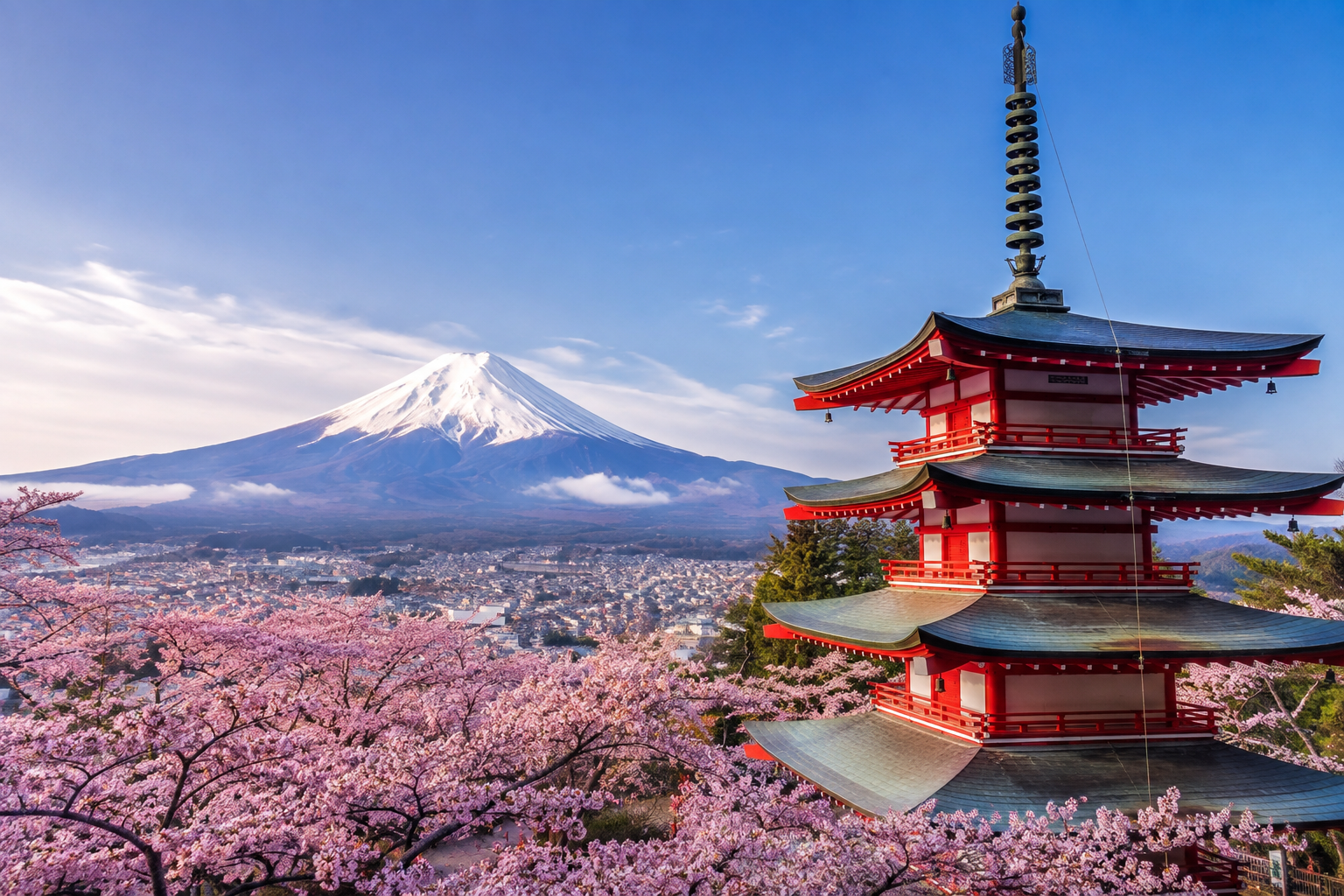
Quick Information Guide
Country
Japan
Capital City
Tokyo
Language
Japanese
International Students
over 300,000
Popular Intakes
April & October
Part-time Work
Up to 28 hours per week (with permission)
Major Destination
Tokyo, Kyoto, Chiba, Osaka, Kobe, Saitama, Sendai, Fukuoka, Hiroshima, Fukuyama, Nagoya, Gifu, Sapporo, Hokkaido, Nagano, Nakano, Okinawa, Khagosima, Nara
Key Highlights
- Globally recognized universities and colleges
- Affordable tuition compared to many Western countries
- Multiple study pathways including language schools and universities
- Scholarship opportunities for international students
- Safe and clean environment
- Part-time work opportunities (subject to immigration permission)
- Excellent public transportation
- Strong employment opportunities after graduation
- World leader in technology, engineering, robotics, and innovation
- One of the most popular destinations for Nepali students
Japan has become one of the fastest-growing study destinations for Nepali students looking for high-quality education, practical learning, affordable tuition fees, and excellent career opportunities. Whether you want to enroll in a Japanese language school, vocational college, undergraduate degree, or postgraduate program, Japan offers world-class education in a safe, innovative, and technologically advanced environment.
Studying in Japan is more than earning a qualification. It gives students the opportunity to learn a new language, experience a unique culture, develop valuable life skills, and prepare for international career opportunities.
At Global Journey Education, we simplify the entire process of studying in Japan. From career counselling and Japanese language preparation to university selection, application support, Certificate of Eligibility (COE), student visa assistance, and pre-departure orientation, our experienced counsellors guide you every step of the way.
Book Your Free Japan Counselling Today
Why Study in Japan from Nepal?
Japan has earned a strong reputation for its high academic standards, advanced technology, disciplined society, and excellent quality of life. Every year, thousands of Nepali students choose Japan because it offers a balance of quality education, affordability, and career development.
Unlike many countries that focus primarily on classroom learning, Japan emphasizes practical education, industry collaboration, innovation, and research. Students graduate with knowledge that is directly applicable in the workplace.
Japan is also home to one of the largest Nepali student communities abroad, making it easier for new students to adapt while experiencing Japanese culture and society.
Ready to Study in Japan from Nepal?
Take the first step toward studying in Japan with expert guidance from Global Journey Education. Our experienced counsellors will assess your academic profile, recommend the right language school or university, explain the admission and visa process, and help you prepare every required document. Whether you're planning to study Japanese, pursue a vocational course, or earn a university degree, we're here to support your journey from Nepal to Japan. Book your free consultation today and start your study abroad journey with confidence.
Why Choose Japan for Higher Education?
Japan is recognized globally for excellence in education, innovation, and research. It is home to some of Asia's leading universities and offers an education system that combines academic knowledge with practical skills.
Students not only receive internationally respected qualifications but also gain valuable experiences that prepare them for careers in a competitive global market.
Below are some of the biggest reasons why Nepali students choose Japan.
Read More: How Much Does It Cost to Study in Japan from Nepal in 2026?
1. High-Quality Education
Japan's universities consistently rank among the world's top institutions for engineering, science, technology, medicine, and business education.
Students benefit from:
Experienced professors
Modern laboratories
Industry-focused curriculum
Research opportunities
Practical training
International learning environment
Graduates from Japanese institutions are respected by employers around the world.
2. Affordable Education
Compared with countries such as the UK, USA, or Australia, studying in Japan is often more affordable.
Students can choose from:
Public universities
National universities
Private universities
Vocational colleges
Japanese language schools
Many institutions also offer tuition reductions and scholarships for international students.
3. Learn the Japanese Language
One of the biggest advantages of studying in Japan is learning Japanese.
Language skills can significantly improve:
Employment opportunities
Daily communication
Internship possibilities
Career growth
Networking opportunities
Even students enrolled in English-taught programs benefit greatly from learning Japanese.
4. Innovation and Technology
Japan is a global leader in:
Artificial Intelligence
Robotics
Engineering
Electronics
Automotive Technology
Manufacturing
Information Technology
Biomedical Research
Students have access to cutting-edge technology and world-class research facilities throughout their studies.
5. Safe and Peaceful Environment
Japan is consistently ranked among the safest countries in the world.
International students enjoy:
Low crime rates
Excellent healthcare
Reliable public transportation
Clean cities
Organized communities
Friendly local culture
These factors make Japan an ideal destination for students living abroad for the first time.
6. Practical Learning
Japanese education emphasizes hands-on learning rather than only theoretical knowledge.
Many programs include:
Laboratory work
Industry projects
Practical assignments
Workshops
Internships
Research activities
This practical approach prepares students for successful careers after graduation.
7. Cultural Experience
Studying in Japan provides an opportunity to experience one of the world's most fascinating cultures.
Students can explore:
Traditional festivals
Japanese cuisine
Historic temples
Modern cities
Anime and manga culture
Advanced technology
Beautiful natural landscapes
Living in Japan helps students become more independent, adaptable, and culturally aware.
8. Scholarship Opportunities
Japan offers various scholarships to international students, including:
MEXT Scholarship
JASSO Scholarship
University Scholarships
Local Government Scholarships
Private Foundation Scholarships
Although scholarships are competitive, they can significantly reduce educational expenses.
9. Career Opportunities
Japan has a strong demand for skilled professionals in sectors such as:
Information Technology
Engineering
Manufacturing
Healthcare
Hospitality
International Business
Education
Students who develop strong academic performance and Japanese language proficiency have better opportunities to build their careers after graduation.
10. Gateway to Asia
Japan's strategic location makes it an excellent base for exploring other Asian countries and developing international business connections.
Graduates with Japanese education and language skills are highly valued by multinational companies operating throughout Asia.
Japan Education System
Japan's higher education system is internationally recognized for its academic excellence, research, and practical learning. Students can choose from several study pathways depending on their qualifications, language proficiency, and career goals.
The most popular study options for Nepali students include:
Japanese Language Schools
Vocational Colleges (Senmon Gakko)
Junior Colleges
Bachelor's Degree Programs
Master's Degree Programs
Doctoral Programs
Research Programs
Each pathway offers different admission requirements, tuition fees, and career opportunities.
Why Choose Global Journey Education for Japan?
Choosing the right education consultancy is one of the most important decisions in your study abroad journey.
At Global Journey Education, we provide personalized guidance tailored to your academic background, career aspirations, and financial situation.
Our Japan services include:
Free career counselling
Japanese language guidance
School and university selection
Application assistance
Document preparation
Certificate of Eligibility (COE) support
Student visa guidance
Financial documentation assistance
Interview preparation
Pre-departure briefing
Our goal is to help you make informed decisions and confidently begin your educational journey in Japan.
Study Options in Japan for Nepali Students
Japan offers multiple education pathways for international students based on their academic qualifications, language proficiency, and long-term career goals. Whether you want to improve your Japanese language skills, pursue a technical qualification, or earn a globally recognized university degree, there is a suitable study route available.
At Global Journey Education, we help you identify the best pathway based on your academic background, budget, language level, and future career plans.
Study at a Japanese Language School
For many Nepali students, a Japanese language school is the first step toward studying and building a career in Japan. These schools help students develop the language skills needed for daily life, higher education, and employment.
Japanese language courses are suitable for students who:
Want to improve their Japanese before entering a university or vocational college.
Plan to work in Japan after graduation.
Need to prepare for the Japanese Language Proficiency Test (JLPT).
Wish to adapt to Japanese culture and academic life.
Most language schools offer courses ranging from six months to two years, depending on the student's entry level and study goals.
Benefits of Joining a Japanese Language School
Learn Japanese from experienced instructors.
Prepare for JLPT examinations.
Develop speaking, reading, writing, and listening skills.
Experience Japanese culture and customs.
Build a strong foundation for further studies.
Study at a Vocational College (Senmon Gakko)
Vocational colleges, known as Senmon Gakko, provide career-focused education with practical training. These institutions are ideal for students who want to gain job-ready skills and enter the workforce quickly.
Programs are designed in collaboration with industry partners, ensuring graduates are equipped with practical knowledge that employers value.
Popular Vocational Courses
Information Technology
Hotel Management
Hospitality and Tourism
Business Administration
Graphic Design
Animation
Automobile Engineering
Mechanical Engineering
Fashion Design
Healthcare Support
Most vocational colleges teach courses in Japanese, so students are generally expected to have an appropriate level of Japanese language proficiency before admission.
Bachelor's Degree in Japan
Students who have completed +2 or equivalent education in Nepal can apply for undergraduate programs at Japanese universities.
Bachelor's degree programs generally take four years to complete, although certain disciplines such as medicine and dentistry require longer study periods.
International students can choose from:
Japanese-taught programs
English-taught programs
Joint international programs
Research-based undergraduate degrees
Popular Undergraduate Courses
Computer Science
Artificial Intelligence
Mechanical Engineering
Civil Engineering
Business Administration
International Business
Economics
Environmental Science
Architecture
Biotechnology
Many universities require entrance examinations, interviews, or language proficiency tests depending on the chosen course.
Master's Degree in Japan
Japan is one of Asia's leading destinations for postgraduate education and research. Master's programs usually take two years and emphasize advanced academic study, research, and professional development.
Students with a recognized bachelor's degree may apply for postgraduate programs in various disciplines.
Popular fields include:
Engineering
Artificial Intelligence
Data Science
Robotics
Computer Science
International Relations
Economics
Public Policy
Business Administration
Environmental Engineering
Some universities offer master's programs entirely in English, making them accessible to international students.
Doctoral (PhD) Programs
Students interested in academic careers or advanced research can pursue doctoral studies at Japanese universities.
PhD programs provide opportunities to:
Conduct independent research
Publish academic papers
Collaborate with leading researchers
Participate in international conferences
Access world-class research laboratories
Japan is especially renowned for research in engineering, technology, medicine, environmental science, and robotics.
Top Courses to Study in Japan
Japan offers a wide range of programs aligned with global industry demand. Choosing the right course depends on your academic background, interests, career objectives, and language proficiency.
Some of the most popular courses among Nepali students include:
Engineering
Japan is internationally recognized for engineering education. Students gain practical experience using advanced laboratories and modern technology.
Specializations include:
Mechanical Engineering
Civil Engineering
Electrical Engineering
Electronics Engineering
Chemical Engineering
Industrial Engineering
Information Technology
Japan has a growing demand for IT professionals.
Popular areas include:
Software Development
Artificial Intelligence
Cybersecurity
Cloud Computing
Data Science
Machine Learning
Mobile Application Development
Robotics and Automation
As a global leader in robotics, Japan provides excellent opportunities for students interested in automation technologies and intelligent systems.
Graduates often find employment in manufacturing, research, and technology companies.
Business and Management
Business programs prepare students for leadership roles in international organizations.
Popular specializations include:
International Business
Finance
Marketing
Human Resource Management
Supply Chain Management
Entrepreneurship
Hospitality and Tourism
Japan's growing tourism industry creates opportunities for graduates in:
Hotel Management
Tourism Management
Event Management
Restaurant Operations
Customer Service
Animation and Game Design
Japan is globally famous for anime, manga, gaming, and digital entertainment.
Students interested in creative industries can study:
Animation
Character Design
Digital Media
Visual Effects
Game Development
Graphic Design
Automotive Engineering
Home to companies like Toyota, Honda, Nissan, Mazda, and Subaru, Japan is one of the world's largest automotive manufacturing hubs.
Students gain industry-focused knowledge and practical technical skills.
Healthcare and Nursing
Japan's aging population has increased demand for healthcare professionals.
Popular courses include:
Nursing
Elderly Care
Medical Technology
Healthcare Management
Rehabilitation Sciences
Top Universities in Japan for Nepali Students
Japan is home to many globally recognized universities offering high-quality education, modern research facilities, and excellent international student support.
Some popular universities include:
Note: Admission requirements, tuition fees, scholarships, and language requirements vary by university and program.
Which Study Option is Right for You?
Choosing the right study pathway depends on several factors, including:
Your academic qualifications
Japanese language proficiency
Budget
Career aspirations
Preferred city
Desired qualification
At Global Journey Education, our experienced counsellors evaluate your profile and recommend the most suitable institution and course to help you achieve your academic and career goals.
Eligibility Criteria to Study in Japan from Nepal
The eligibility requirements vary depending on the institution and study program. Generally, Nepali students should have the required academic qualifications, meet the language requirements, demonstrate genuine study intentions, and provide sufficient financial support for tuition and living expenses.
Our counsellors assess your profile and recommend suitable institutions based on your academic background and career goals.
Explore: Japan Student Visa Requirements for Nepali Students →
Japan Intakes
Japan offers multiple intakes throughout the year, depending on the type of institution.
Starting your application 6–12 months in advance gives you enough time for language preparation, document collection, and visa processing.
Read More: Japan Intake Guide for Nepali Students →
Admission Requirements
Admission requirements differ by university, language school, and vocational college. Most institutions consider your academic qualifications, language proficiency, financial capability, and study plans during the admission process.
Some universities may also require entrance examinations or interviews.
Learn More: Admission Requirements to Study in Japan →
Required Documents
The exact document checklist depends on your chosen institution and course. However, most applicants are generally required to submit:
Valid Passport
Academic Certificates and Transcripts
Recent Passport-size Photographs
Study Plan or Statement of Purpose
Financial Documents
Sponsor Documents (if applicable)
Language Proficiency Certificates (if required)
Our team will provide you with a personalized document checklist based on your application.
Read More: Japan Student Visa Document Checklist →
Japan Student Visa from Nepal
After receiving admission and the Certificate of Eligibility (COE), students can apply for a Japanese student visa. The visa application includes submitting the required documents, completing the official procedures, and meeting the latest requirements set by the Embassy of Japan in Nepal.
Global Journey Education provides end-to-end guidance throughout the student visa process.
Explore: Japan Student Visa Process from Nepal →
Certificate of Eligibility (COE)
The Certificate of Eligibility (COE) is an important document issued by the Japanese Immigration Services Agency. In most cases, your educational institution applies for the COE on your behalf after reviewing your admission and financial documents.
Once issued, the COE is used during the student visa application process.
Read More: What is a COE for Japan? →
Step-by-Step Application Process
Studying in Japan involves several important steps. Our team makes the process simple and organized.
Free Career Counselling
Choose the Right Institution
Prepare Language Requirements
Submit Your Application
Receive Admission Offer
Apply for the Certificate of Eligibility (COE)
Pay Tuition Fees
Apply for a Student Visa
Attend Pre-Departure Orientation
Begin Your Study Journey in Japan
Our experienced counsellors support you at every stage to ensure a smooth application experience.
Financial Requirements
International students must demonstrate sufficient financial resources to cover tuition fees and living expenses in Japan. The required amount depends on your institution, course, study duration, and sponsor's financial background.
You'll generally need to provide documents such as bank statements, income certificates, sponsorship letters, and proof of the source of funds.
Our experts will guide you in preparing the appropriate financial documents according to your chosen institution's requirements.